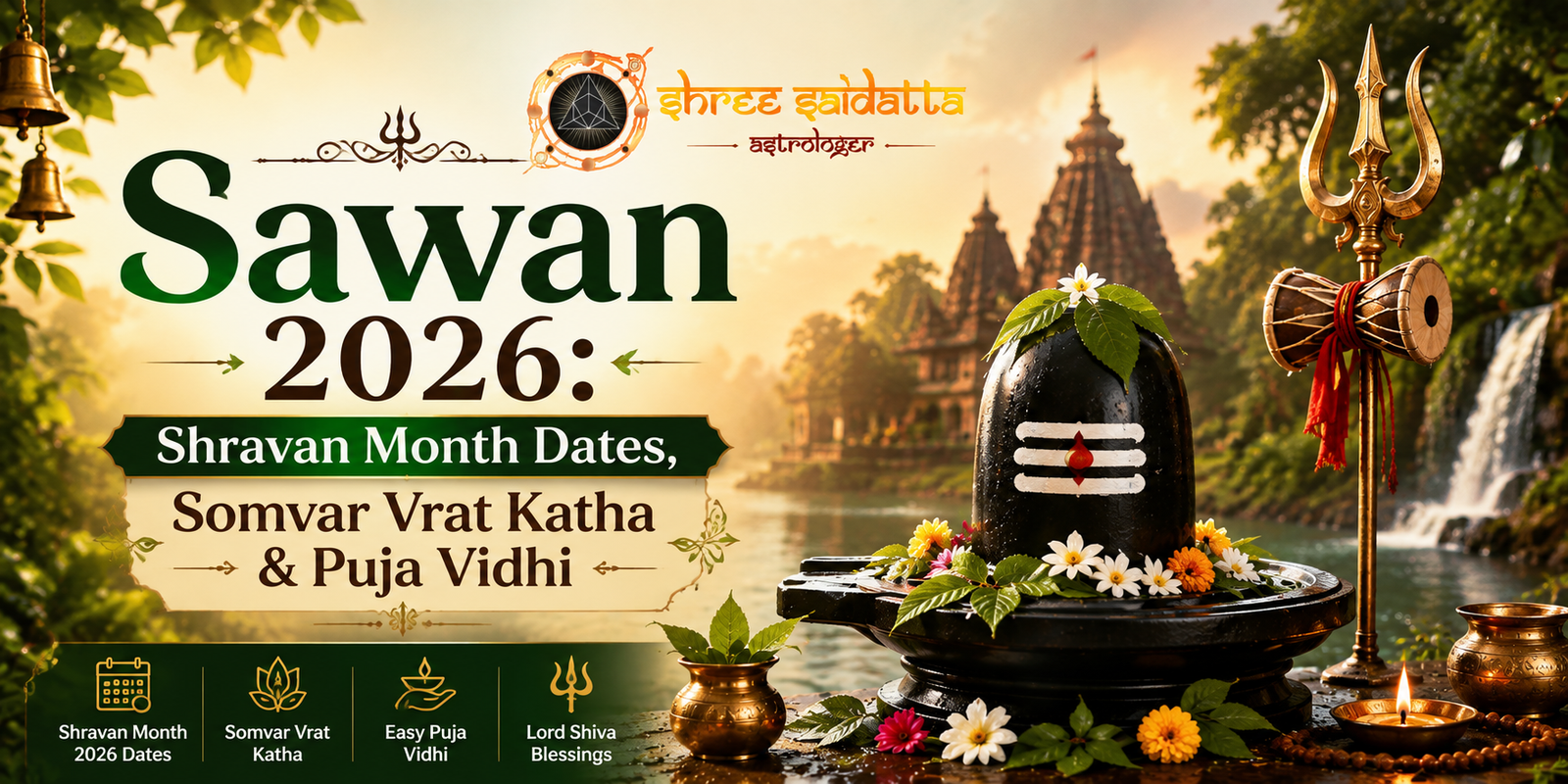
Shravan, also known as Sawan, is one of the most sacred months in the Hindu calendar and is devoted entirely to Lord Shiva. Every year, millions of devotees observe Somvar (Monday) fasts during this month, believing that Lord Shiva blesses sincere devotees with health, peace, and prosperity. If you have been searching for Sawan 2026 dates, Shravan Somvar Vrat Katha, or the correct puja vidhi to follow, this guide covers everything you need to know.
When Does Shravan Month 2026 Start and End?
One common source of confusion every year is that Shravan dates differ depending on which part of India you live in. This happens because North India follows the Purnimanta calendar, while Maharashtra and most of western and southern India follow the Amanta calendar.
Maharashtra & South India (Amanta calendar): Shravan Maas 2026 runs from August 13 to September 11, 2026.
North India (Purnimanta calendar): Shravan Month 2026 runs from July 30 to August 28, 2026.
If you live in Pune, Mumbai, or anywhere else in Maharashtra, the Amanta calendar dates above are the ones relevant to you. This is also why searches for “Shravan Somvar 2026 Maharashtra” often show different dates compared to searches from Delhi or Uttar Pradesh — both are correct, just based on different regional calendars.
Shravan Somvar Vrat Dates 2026 (Maharashtra Calendar)
For devotees in Maharashtra and western India, the four Somvar Vrat dates to mark on your calendar this year are:
- 1st Somvar Vrat: Monday, August 17, 2026 (this also coincides with Nag Panchami)
- 2nd Somvar Vrat: Monday, August 24, 2026
- 3rd Somvar Vrat: Monday, August 31, 2026
- 4th Somvar Vrat: Monday, September 7, 2026
Many devotees consider the first Somvar Vrat especially important, as it sets the tone for the entire month of devotion. Since it falls on Nag Panchami this year, it is considered an even more auspicious day to begin your Shravan fasting and Shiv Puja.
The Legend Behind Shravan Somvar Vrat Katha
Every ritual in Hindu tradition carries a story, and the Shravan Somvar Vrat is no exception. The most widely told Vrat Katha describes a wealthy merchant who lived in a prosperous city but remained deeply unhappy because he had no children. Despite his wealth, he felt his life was incomplete.
Out of devotion and desperation, the merchant turned to Lord Shiva with unwavering faith, observing the Somvar fast with complete sincerity. Moved by his devotion, Lord Shiva and Goddess Parvati blessed him with a son. However, there was a condition — the child was destined to have a very short life.
As the story unfolds, it is the boy’s mother who ultimately changes his fate. Through her continued faith, strict observance of the Monday fast, and unwavering devotion to Lord Shiva even after the child’s birth, she is able to extend her son’s life. The katha is usually read aloud in the evening, just before devotees break their fast, as a reminder of the power of sincere devotion.
The core message of this story is simple yet powerful: those who observe the Shravan Somvar Vrat with a pure heart and true faith are blessed with good health, wealth, and freedom from life’s sorrows — no matter how difficult their circumstances may seem.
Shravan Somvar Puja Vidhi: Step-by-Step Rituals
If you are observing the Somvar Vrat this Shravan, following the correct puja vidhi is considered essential for the fast to be effective. Here is the traditional method followed by most devotees:
- Wake up early and purify your space. Rise before sunrise, take a bath, and clean your home and puja area thoroughly. Wearing clean clothes, preferably in white or light colors, is considered auspicious for Shiv Puja.
- Visit a Shiva temple. While home puja is acceptable, visiting a Shiva temple on Somvar is considered especially beneficial during Shravan.
- Perform Abhishek on the Shivling. This is the central ritual of the day. Devotees pour clean water, milk, honey, and curd over the Shivling one after another, each representing purity, nourishment, sweetness, and prosperity.
- Offer Bel Patra and other items. Bilva (bel patra) leaves are considered extremely dear to Lord Shiva and are offered along with white flowers and sandalwood paste (chandan). Many devotees also offer dhatura and akand flowers, which are traditionally associated with Shiva worship.
- Chant the sacred mantras. Throughout the day, devotees recite the Panchakshari mantra “Om Namah Shivaya” or the Mahamrityunjaya Mantra. These mantras are believed to bring peace of mind, remove obstacles, and protect against untimely difficulties.
- Read or listen to the Vrat Katha. In the evening, before breaking the fast, the Somvar Vrat Katha is read or narrated to reaffirm faith and understand the significance of the day’s observance.
- Break the fast with satvik food. The fast is typically broken with simple, sattvic meals — often fruits, milk-based dishes, or foods made without onion and garlic — after the evening puja is complete.
Fasting Rules to Keep in Mind
While rules can vary slightly by family tradition, most devotees follow these general fasting guidelines during Shravan Somvar:
- Avoid grains, non-vegetarian food, onion, and garlic through the day.
- Many devotees consume only fruits, milk, or a single satvik meal in the evening.
- Water and milk are permitted throughout the fast for most people.
- Those with health conditions, pregnant women, and elderly individuals are advised to modify the fast according to their doctor’s or family astrologer’s guidance rather than following it strictly.
Why Shravan Month Holds Such Deep Importance
Shravan is regarded as Lord Shiva’s most beloved month according to Hindu tradition, which is why the entire period — not just Mondays — is considered spiritually significant. Devotees often use this month to start new spiritual practices, perform Vastu and puja-related remedies for their homes, and seek astrological guidance for ongoing personal or family challenges. Since Shravan Somvar coincides with a period of heightened devotional energy, many people also choose this month to consult an astrologer for marriage compatibility, career decisions, or remedies related to health and finance.
Final Thoughts
Whether you are observing the Somvar Vrat for the first time or have followed this tradition for years, Shravan Month 2026 offers a meaningful opportunity to reconnect with faith, discipline, and devotion to Lord Shiva. If you would like personalized guidance on which remedies, pujas, or fasting practices are best suited to your horoscope this Shravan, feel free to book a consultation with Pandit Pravin Shastri at Shree Saidatta Jyotish, Pune’s trusted name in Vedic astrology for over 25 years.
Frequently Asked Questions
When is Shravan 2026 in Maharashtra?
Shravan 2026 in Maharashtra begins on August 13 and ends on September 11, 2026, following the Amanta calendar.
How many Somvar Vrats are there in Shravan 2026?
There are four Somvar Vrats in Maharashtra this year, falling on August 17, August 24, August 31, and September 7, 2026.
Which is the most important Somvar of Shravan?
The first Somvar is considered particularly significant, and in 2026 it holds extra importance as it coincides with Nag Panchami on August 17.
Can I do the Shravan Somvar Vrat without a full day fast?
Yes. Many devotees observe a modified fast, eating fruits or a single satvik meal, especially if health does not permit a strict fast. The devotion and puja matter more than the strictness of the fasting itself.
What should I offer Lord Shiva during Shravan Somvar Puja?
The most important offerings are bel patra (bilva leaves), clean water, milk, honey, curd, white flowers, and sandalwood paste during the Abhishek. These offerings are believed to please Lord Shiva and bring peace, prosperity, and the fulfillment of sincere wishes.